

Huawei Releases Northern Africa AIDC Reference Design White Paper, Accelerating Intelligent Transformation in Africa
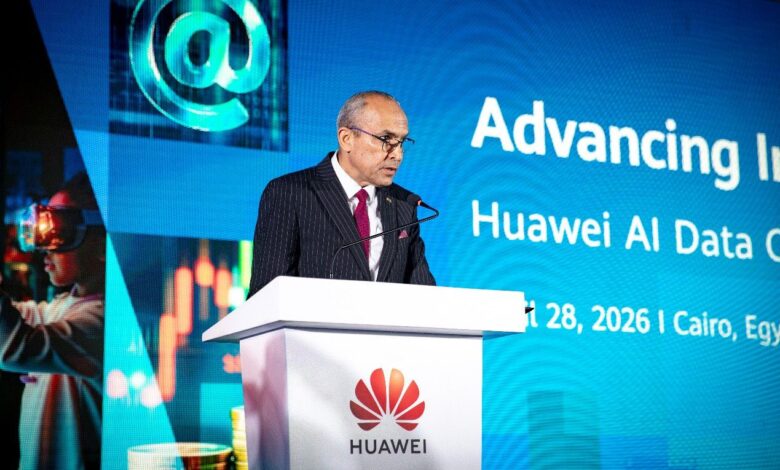
During Huawei Intelligent Africa Congress 2026, the company held the AI Data Center Innovation Summit in Egypt. Themed “Advancing Industrial All Intelligence for Africa,” the summit brought together customers and partners from various industries to discuss the business opportunities, innovative solutions, and success cases in intelligent transformation. During the summit, Huawei released the Northern Africa AIDC Reference Design White Paper, providing systematic design ideas and construction solutions for AI Data Center facilities in Africa
“AI is no longer a support tool; it is moving into the core of production,” said Benjamin Hou, CEO of Huawei Egypt, in his speech. “Today, AI agents can plan, execute, and optimize complex tasks autonomously. These are the breakthroughs that change countries, industries, and individual lives forever.” Hou added that Egypt is actively implementing its Second National AI Strategy, aiming to transition the nation from a consumer of technology to a producer of AI. The speech highlighted that as a global leading provider of ICT infrastructure and smart terminals, Huawei is committed to leveraging its comprehensive capabilities across three domains: connectivity, computing, and digital power. Huawei is a firm believer in open collaboration and shared success, and will continuously bring advanced technologies and experience to Africa, empowering and working together with local partners to build a future where Africa is fully inclusive, connected, and intelligent
In his speech, Engineer Ahmed Fahmy, General Manager of Administrative Capital for Urban Development, said that the vision of the New Administrative Capital is not only to build a modern city, but also to create a replicable smart city model for the entire African continent. Currently, the New Capital has built a complete fiber-optic network, creating a “nervous system” for the city. At the same time, Egypt is opening its technological platforms to all African enterprises, startups, and factories, calling on them to implement and test smart solutions in logistics, manufacturing, energy, and other sectors. This initiative aims to make the New Capital an incubator for innovations. Mr. Ahmed Fahmy urged partners, investors, and innovators to work together to build the New Capital into a Living Lab and jointly showcase the bright future of Africa’s digital and intelligent transformation
Tony Wu, Vice President of Huawei Computing Marketing & Solution Sales Department, delivered a keynote speech. He said that AI applications have entered a critical period of large-scale adoption, and models and infrastructure are becoming the core carriers of national digital and intelligent development. Huawei has built an innovative SuperPoD architecture, and is working on a comprehensive compute backbone that covers AI cards, enterprise DCs, and large DCs. Huawei advocates for open-source software to empower developers for efficient innovation. Huawei also works with partners to create agile, scenario-specific industry solutions through ecosystem enablement, and has collaborated with over 20 partners to launch out-of-the-box solutions. These solutions are delivering immense value in sectors like government, finance, and education. Huawei will continue to innovate architectures and open-source software while expanding its ecosystem to speed up Africa’s digital and intelligent transformation, bridging the intelligent divide.
Erich Hu, Director of Huawei Product Portfolio Data Center Marketing & Solution Sales Department, said that in the intelligent world, DCs have shifted from cost centers to value centers. As agentic AI becomes more integrated into enterprises’ core production applications, the surging demand for tokens is driving the continuous explosion of computing power. Huawei has developed AI Data Center infrastructure solutions based on five key technologies and capabilities—SuperPoD, compute-network synergy, compute-storage synergy, compute-cloud synergy, and compute-management synergy—all centered around converged ICT innovation. “SuperPoDs will become a popular choice for AI Data Centers,” Hu emphasized. “They are flexible and support different deployment scales, and work with both air and liquid cooling, so enterprises can choose the cooling method that best suits their needs.” Huawei will continue to build a solid compute backbone using digital and intelligent technologies, and empower various industries through open collaboration, supporting global customers in intelligent transformation.
Galal Roshdy, CTO of Huawei Egypt Hybrid Cloud, said that just as the public power grid fueled the second industrial revolution, cloud systems are now becoming the fundamental infrastructure for today’s intelligent world. Huawei Cloud provides agentic applications, industry-specific LLMs, and AI infrastructure, including Model as a Service (MaaS), which aims to help customers achieve simpler and faster inference. Huawei Cloud powers over 500 AI applications across more than 30 industries. Huawei Cloud’s Egypt node provides diverse capabilities like security compliance, AI and big data, and cloud databases, and now is actively building leading FinTech partnerships throughout the country. Huawei Cloud is committed to working with customers to promote the use of AI in more core production processes across various industries, to truly convert technologies into business value
Cui Hong, Director of Huawei Data Center Integration Solution Department, said that as local AI inference applications increase, inference computing power will surpass training computing power by 2026. To meet IT infrastructure evolution, AI Data Center planning should stay slightly ahead of current needs. With its comprehensive technologies and services for facilities and IT infrastructure, Huawei focuses on the concepts of Infra Ready, Operation Ready, and Performance Ready, to help customers deploy strategic AI resources. In terms of design, AI-assisted tools can output Building Information Modeling (BIM) and material lists within one day. For O&M, the liquid cooling diagnosis agent shifts from repair to prevention. Additionally, Huawei’s semi-prefabricated construction solutions reduce the time to market (TTM) to under 10 months. They also implement collaborative optimization, cutting energy consumption by over 12%. To date, Huawei has delivered over 1,000 DCs worldwide and implemented multiple projects in Africa, fulfilling its commitment to serving Africa
Huawei released the Northern Africa AIDC Reference Design White Paper. This white paper provides systematic suggestions on the design of AI Data Center facilities in terms of heat dissipation, power supply, building structure, and network cabling. It also outlines diversified delivery models, aiming to improve construction efficiency while ensuring quality, to promote the rapid and large-scale replication of AI Data Center facilities
The intelligent wave is here, and Africa is ready. Looking ahead, Huawei will keep innovating and working with customers and partners to foster open collaboration and intelligent development, leading Africa toward a fully intelligent future